Lockeport’s story begins in 1762 when two families from Massachusetts — the Lockes and the Churchills — discovered the sheltered waters of Allendale Bay. Recognizing its potential as a fishing and trading hub, they established what would become one of Nova Scotia’s most prosperous coastal communities.
The patriarchs of those first two families, Jonathan Locke and Josiah Churchill, went on to become the captains of industry in the area. Churchill became the first mayor of the Township of Locke’s Island, registered in Liverpool in 1764.
The Ragged Islands
The islands surrounding Allendale Bay are known as the Ragged Islands — a rugged, beautiful archipelago that gives our region its distinctive character. Connected to the mainland by the Crescent Beach causeway, Lockeport sits on a peninsula within this historic island landscape.
These islands have witnessed centuries of maritime history and continue to define the coastal character of Lockeport.
Golden Age
Locke’s Island and its surroundings entered a period of booming industry, with hotels, trade warehouses, and multiple fish plants being constructed. Large trade ships plied the sea lanes from Locke’s Island to the West Indies, loaded with lumber and salt cod, returning to town laden with molasses and salt. Fishing schooners were constantly returning from the Grand Banks loaded with cod.
However, this golden age of the Ragged Islands would eventually come to an end, with the first of many challenges coming in the form of a fish market collapse in the 1890s.
Incorporation
In 1907, a meeting was held among the rate-payers of the town. It was obvious to all in attendance that drastic action would need to be taken in order to stimulate the economy of Locke’s Island. They decided that the Township of Locke’s Island would become the Town of Lockeport.
A Living Heritage
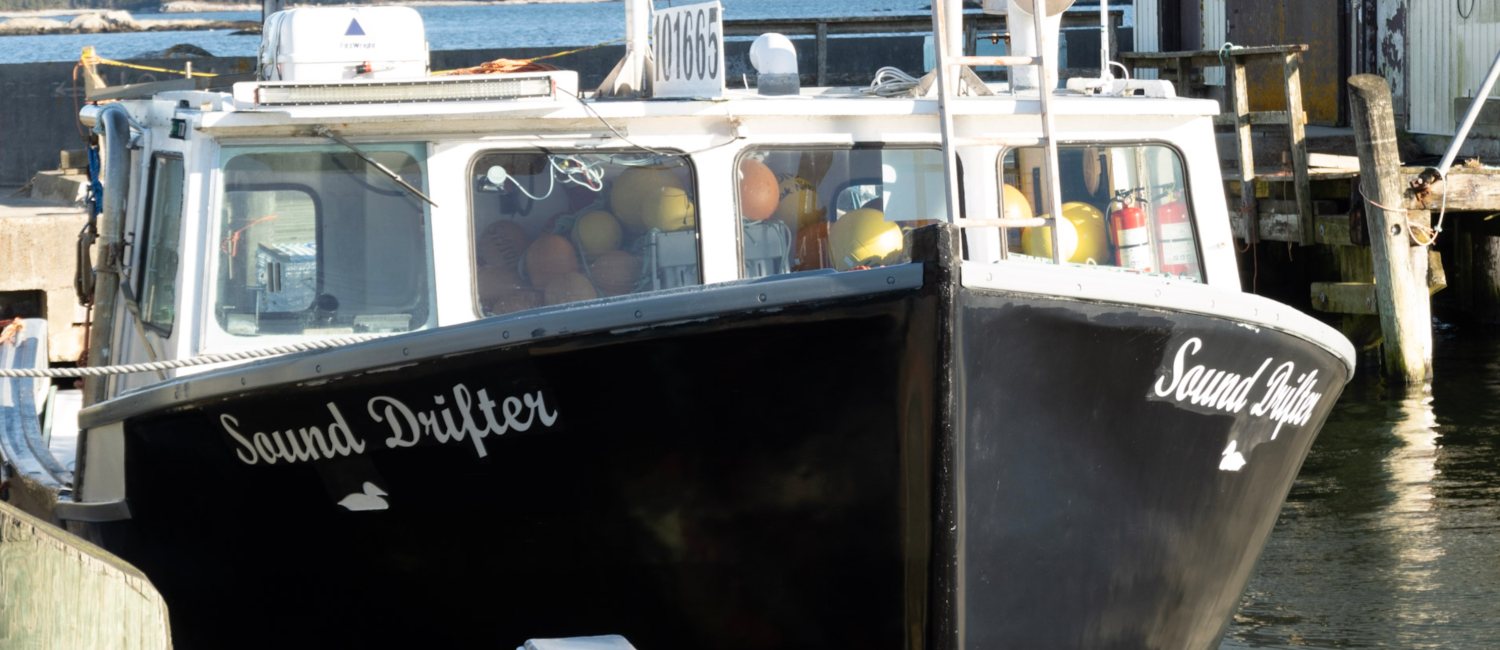
Today, Lockeport remains a working fishing community, proud of its maritime heritage and connected to the sea that shaped it. From the wharves to the historic streetscape, the town’s history is visible at every turn — and the fishing industry continues to be part of our identity, our skills, and our sense of pride.